-
 By Dr. Tint & Wrap
- 06/05/2026
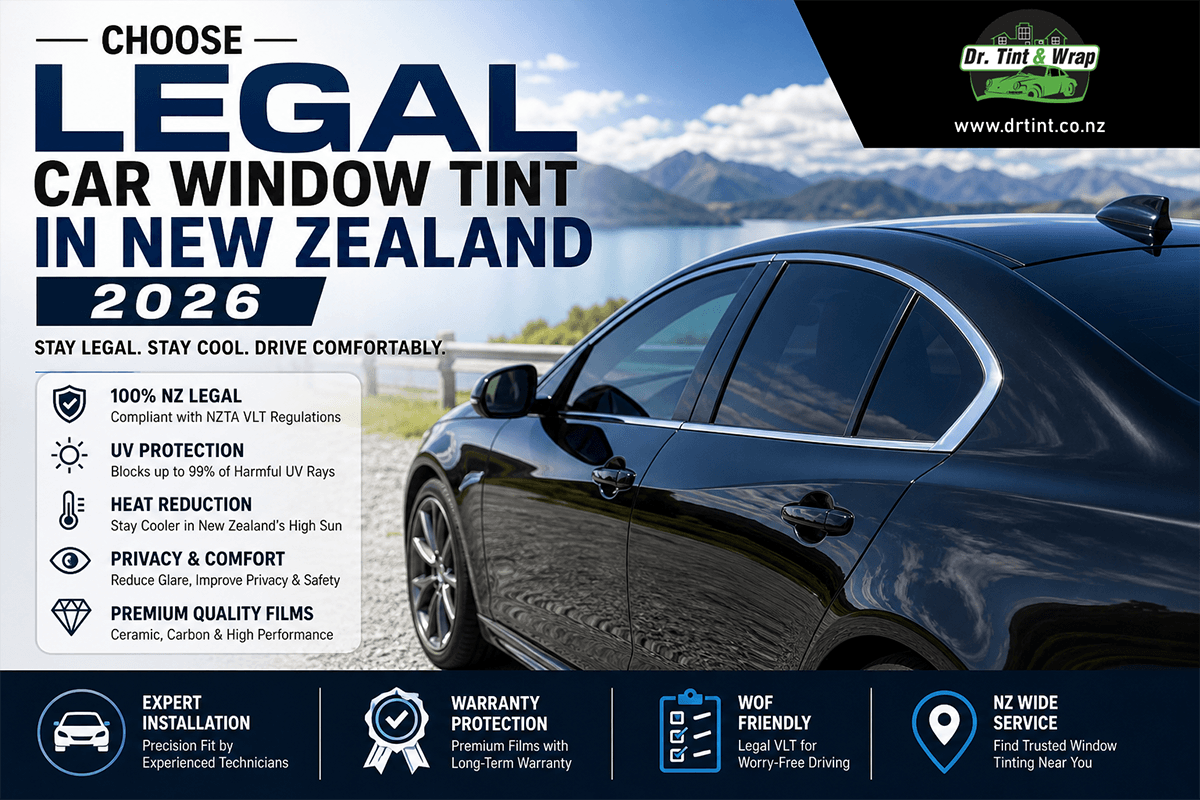
Choose Legal Car Window Tint in New Zealand 2026: Complete Vehicle Window Tinting Guide
Many vehicle owners search for window tinting services near me without fully understanding New Zealand tint laws or the difference between ceramic, carbon, and standard films. Choosing the wrong tint can lead to WOF failure, fines, poor night visibility, or low-quality film that bubbles and fades quickly.
This guide will help you understand how to choose legal vehicle window tinting in New Zealand for 2026, what VLT means, how much window tinting cost and installation usually involves, and how to choose the best installer for long-term results.
Understanding Vehicle Window Tinting in New Zealand
What Is Vehicle Window Tinting?
Vehicle window tinting is the process of applying a thin protective film to your car windows. This film helps reduce sunlight penetration, blocks harmful UV rays, improves privacy, reduces glare, and helps keep your vehicle cooler during hot weather.
Modern car window tint film is designed not only for appearance but also for performance. Premium films can significantly improve heat rejection while maintaining clear visibility and legal compliance.
New Zealand drivers often choose window tinting for:
- UV protection
- Heat reduction during summer
- Reduced glare while driving
- Increased privacy and security
- Protection against interior fading
- Improved vehicle appearance
What Is VLT (Visible Light Transmission)?
VLT stands for Visible Light Transmission. It measures how much visible light passes through your window glass and tint film combined.
A higher VLT percentage means lighter tint.
A lower VLT percentage means darker tint.
For example:
- 70% VLT = lighter tint
- 35% VLT = darker legal tint
- 20% VLT = darker but often illegal for front windows
This is important because New Zealand law regulates legal tint levels based on overall VLT, not just the tint film itself.
If your factory glass already has some tint, adding a 35% film may push your final VLT below the legal limit. This is why professional measurement matters. NZTA notes that front side windows must have an overall VLT of at least 35%, and the combined glass + film result is what is tested.
Legal Car Window Tint Rules in New Zealand for 2026
Front Side Window Tint Rules
The windows on either side of the driver must have an overall VLT of at least 35%.
This means the darkest legal tint for front side windows is 35% overall, not necessarily a 35% film.
Professional installers should always check the existing factory glass before recommending film. NZTA confirms front side windows fitted with transparent overlays must maintain at least 35% VLT.
Rear Window Tint Rules
For passenger vehicles (Class MA vehicles such as sedans, hatchbacks, station wagons, and many SUVs), rear windows must also maintain at least 35% VLT.
For vans, utes, trucks, and some commercial vehicles, darker rear tint may be allowed behind the driver.
This is why vehicle classification matters before installation.
Windscreen Tint Rules
Full windscreen tinting is not legal in New Zealand.
The only legal option is a top anti-glare sun strip that does not extend lower than the bottom of the sun visors. NZTA allows anti-glare bands only within these limits.
If someone offers full windscreen tinting, it may create WOF and legal compliance issues.
Why Staying Legal Matters
Choosing legal New Zealand window tinting helps you avoid:
- WOF failure
- Police fines
- Insurance claim complications
- Poor night driving visibility
- Reduced road safety
Legal tint protects both your vehicle and your long-term investment.
Choosing the Right Car Window Tint Film
Dyed Window Tint Film
Dyed tint is the most affordable option.
It offers:
- Basic privacy
- Glare reduction
- Improved appearance
However, it provides lower heat rejection and tends to fade faster over time.
Carbon Window Tint Film
Carbon tint offers better long-term value.
Benefits include:
- Better heat reduction
- Improved UV protection
- Stronger fade resistance
- Matte finish appearance
- Longer lifespan than dyed film
It is a strong mid-range option for daily drivers.
Ceramic Window Tint Film
Ceramic tint is the premium option.
It provides the best:
- UV protection window tint
- Heat reduction tint for high sun exposure
- Infrared heat rejection
- Glare reduction
- Optical clarity
- Long-term durability
Unlike metallic films, ceramic tint does not interfere with GPS, mobile signals, or electronic systems.
For New Zealand’s strong summer UV conditions, ceramic film is often the best long-term investment.
Which Film Is Best for New Zealand Conditions?
Because New Zealand experiences high UV levels and strong summer sun, ceramic tint is often the preferred choice for drivers who want maximum comfort and interior protection.
Carbon tint offers excellent value for budget-conscious drivers.
Dyed film works best for those focused mainly on privacy and appearance.
The best option depends on your budget, driving habits, and long-term goals.
Window Tinting Cost and Installation in New Zealand
Average Window Tinting Cost
Pricing varies depending on vehicle size and film quality.
Higher-end films cost more initially but often deliver better long-term value.
What Affects Tinting Cost
Several factors influence final pricing:
- Type of car window tint film
- Vehicle size
- Number of windows
- Film brand and warranty
- Installer experience
- Legal VLT compliance testing
Cheap quotes often mean lower-quality materials.
How to Find Reliable Window Tinting Services Near Me
What to Look for in an Installer
When searching for window tinting services near me, look for:
- Proven experience
- Strong customer reviews
- Legal compliance knowledge
- High-quality film brands
- Warranty-backed installation
- Proper VLT testing equipment
The right installer protects both your investment and your legal compliance.
Why Professional Installation Beats DIY Tinting
Common DIY Problems
DIY tinting often creates:
- Air bubbles
- Dust contamination
- Poor edge finishing
- Incorrect heat shrinking
- Illegal VLT results
- Peeling corners
Even small mistakes can ruin visibility and shorten film life.
Why Choose Dr. Tint & Wrap for Vehicle Window Tinting in New Zealand
Trusted Expertise
Dr. Tint & Wrap has built a strong reputation for professional vehicle window tinting across New Zealand, helping drivers choose the right legal tint for comfort, style, and compliance.
Premium Film Options
From carbon to high-performance ceramic films, Dr. Tint offers premium tint solutions designed for UV protection, heat reduction, and long-lasting performance.
Legal NZ-Compliant Installation
Every installation is completed with New Zealand tint regulations in mind, helping customers stay road legal and WOF ready.
Long-Term Warranty Protection
Quality film and expert installation are backed by warranty protection, giving drivers confidence for years to come.
Professional Results for Every Vehicle
Whether you drive a family SUV, work ute, daily sedan, or luxury vehicle, professional tinting ensures the right finish every time.
Conclusion
Choosing the right vehicle window tinting in New Zealand is about much more than appearance.
Legal VLT compliance, strong UV protection, heat reduction, and quality installation all matter if you want real long-term value.
The right tint improves comfort, protects your interior, reduces glare, and helps keep your vehicle cooler during hot New Zealand summers.
Whether you choose ceramic, carbon, or standard tint, working with experienced professionals ensures the best outcome.
If you are looking for trusted New Zealand window tinting with expert installation and legal peace of mind, Dr. Tint & Wrap is the smart choice for lasting results.